This isn’t built on a hunch

Relative Choice™ exists because the evidence demands it. The loneliness crisis is real, it’s serious, and until now nobody has built a proper solution for it.

Here’s what the research actually shows.

Having a coffee with chosen family - Relative Choice

How many people are we talking about?

More than 100 million Americans currently lack adequate family support. That’s not one demographic, one age group, or one type of situation. It’s a crisis that cuts across every part of society.

Stat: 22% of adults say they don’t have a single person in their life they feel truly close to. (Harvard Study on Adult Development, 2023)

Stat: 6 million older adults in the US are strictly kinless – no living spouse, children, or nearby family. (National Institute on Aging, 2023)

Stat: 67+ million adults in the US are estranged from at least one family member. (Pillemer, 2020)

Stat: 500,000+ young adults age out of foster care every year without a permanent family. (Child Welfare Information Gateway, 2023)

Stat: 1 in 3 parents say they have no one to turn to for childcare or emergency help. (Center for American Progress, 2018)

The reasons are as varied as the people affected. Estrangement – from conflict, abuse, political or religious difference, or identity. Loss – death, distance, the slow drift of years. Life circumstances – aging out of care, migrating for work, being the family member who didn’t fit.

Whatever the route, the destination is the same: going through life without the family support that most people take for granted.

Sharing a bowl of food with chosen family - Relative Choice

This isn’t just an emotional problem

In 2023, US Surgeon General Dr. Vivek Murthy declared loneliness a public health crisis. The physical consequences are as serious as any chronic illness.

“Loneliness is as deadly as smoking 15 cigarettes a day. Creating meaningful social connections – whether with biological family or chosen family – can literally save lives.” — Dr. Vivek Murthy, US Surgeon General

  • Social isolation increases the risk of premature death by 29% – making it as dangerous as obesity or smoking. (Holt-Lunstad et al., 2020 – PNAS)
  • Loneliness is linked to a 32% increase in stroke and heart disease. (Valtorta et al., 2016 – Heart Journal)
  • People lacking strong social ties have a 40% increased risk of dementia and Alzheimer’s. (Wilson et al., 2020 – Journal of Gerontology)
  • Socially isolated individuals are 60% more likely to develop diabetes, hypertension, and other chronic conditions. (Chakraborti, 2020)
  • People without family support are three times more likely to experience financial hardship.

The good news: chosen family is as effective as biological family

A significant body of research shows that people who build strong chosen family networks experience the same health, emotional, and practical benefits as people with strong biological family ties.

  • Strong non-biological kinship networks enhance emotional stability and reduce stress-related diseases. (Elmitt, 2020)

  • People who lack biological family but build chosen families are just as likely to receive financial assistance and elder care as those with strong family ties. (Surtees, 2017 – Canterbury Research)

  • Kin-like social networks among elderly adults improve mental health, decrease cognitive decline, and provide practical caregiving support. (Ghosh & Sanyal, 2019)

  • Single parents who build strong support networks report similar levels of wellbeing and resilience as parents with extended biological families. (Madureira, 2024)

Family is about who shows up for you. Millions of people today need alternative family structures, but they have no structured way to build them.” — Dr. Karl Pillemer, Professor of Human Development, Cornell University

Does starting online actually work?

Relative Choice™ isn’t designed to keep people in an endless loop of digital interaction. The goal is real relationships. So the question matters: does meeting online lead to real-world connection?

The research says yes.

  • 76% of people who meet for social support online eventually meet in person if a structured pathway exists. (Renshaw & Carley, 2024)

  • Guided social matching systems increase the likelihood of real-world interaction by 62%. (Thomas et al., 2020)

  • People who meet online and then transition offline report higher satisfaction in their relationships than those who only interact digitally. (Wang & Guo, 2024)

  • Initial online interactions help reduce anxiety, build trust, and strengthen in-person relationships. (Ramirez et al., 2015)

The key word in that first statistic is “structured”. Left to chance, online connections often stay online. Given a clear pathway – which is exactly what Relative Choice™ provides – they become something real.

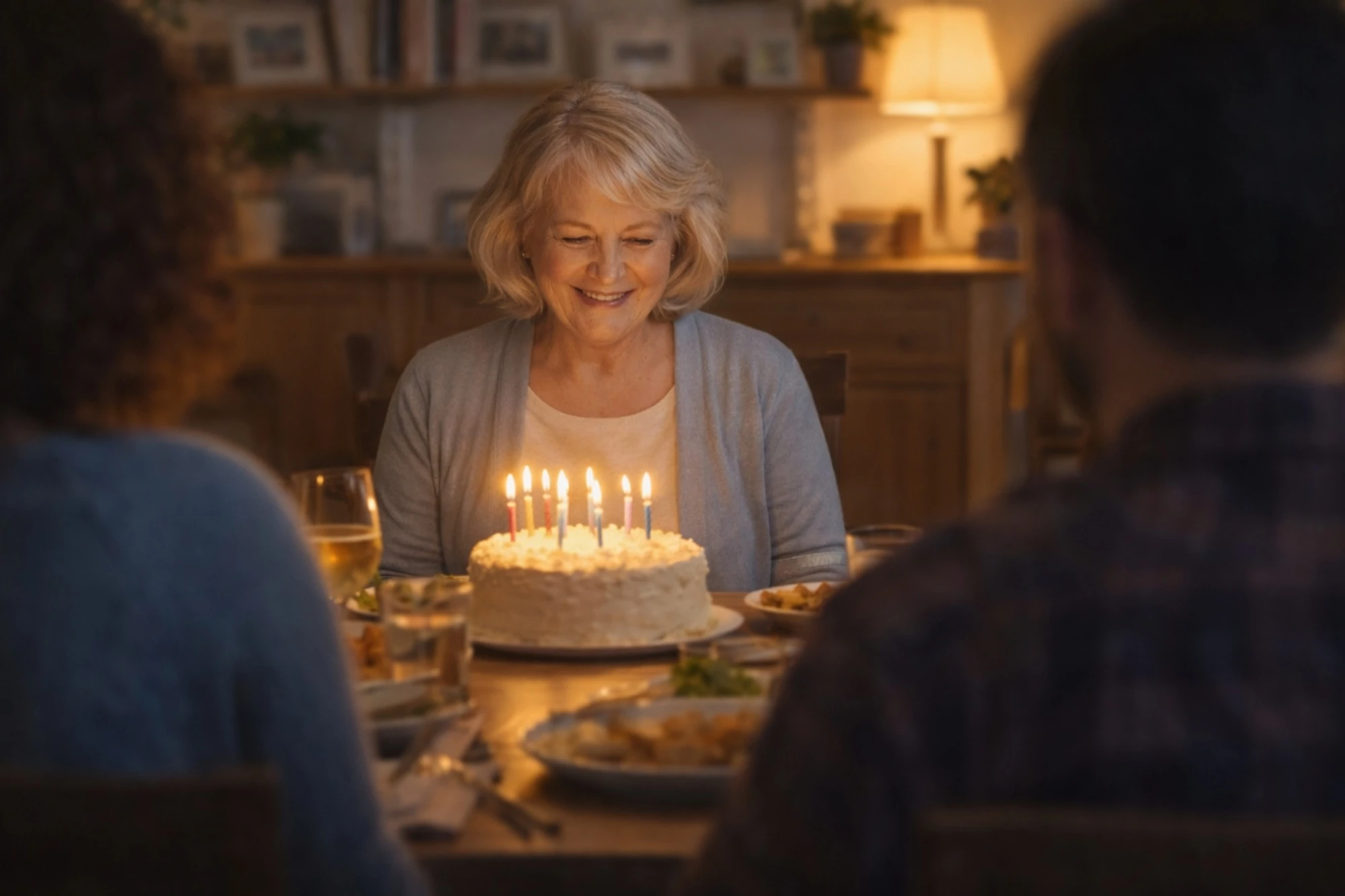
Celebrating a birthday with chosen family - Relative Choice

The evidence points to one conclusion

The scale of the problem is enormous. The consequences of doing nothing are serious. And the research shows clearly that chosen family works – that it delivers the same belonging, health outcomes, and practical support as biological family.

What’s been missing is a structured, safe, purpose-built way for people to find each other.

That’s what Relative Choice™ is here to provide.